A custom pressure vessel needs to fit both the process it serves and the space where it will operate. Pressure and temperature matter, but so do piping connections, maintenance access, material requirements and the route the equipment will take into the facility.
For engineers, equipment manufacturers and purchasing teams, a clear starting specification makes it easier to discuss options, compare quotations and coordinate fabrication. This custom pressure vessel guide explains what to prepare, what can affect cost and delivery, and which questions to ask before your project moves into production.
- When Does a Project Need a Custom Pressure Vessel?
- What Should You Define Before Requesting a Quote?
- What Changes the Cost and Delivery Schedule?
- What Should You Ask a Pressure Vessel Manufacturer?
- How Does a Custom Pressure Vessel Move Through Fabrication?
- What Can You Clarify Early to Reduce Rework?
- Planning Your Pressure Vessel Project with Alps Welding
When Does a Project Need a Custom Pressure Vessel?
A custom pressure vessel is designed around the requirements of a particular application. It may be needed when standard equipment cannot accommodate the process conditions, required capacity, installation layout or connections to surrounding equipment.
For example, a vessel installed on a skid may need specific support locations and nozzle orientations to align with piping. A replacement vessel may have to fit an existing foundation and pass through a restricted opening. A filtration vessel may require internal supports and access for servicing its components.
The design discussion should therefore cover how the vessel will be used, installed, inspected and maintained. Overall dimensions alone do not describe all of those requirements.
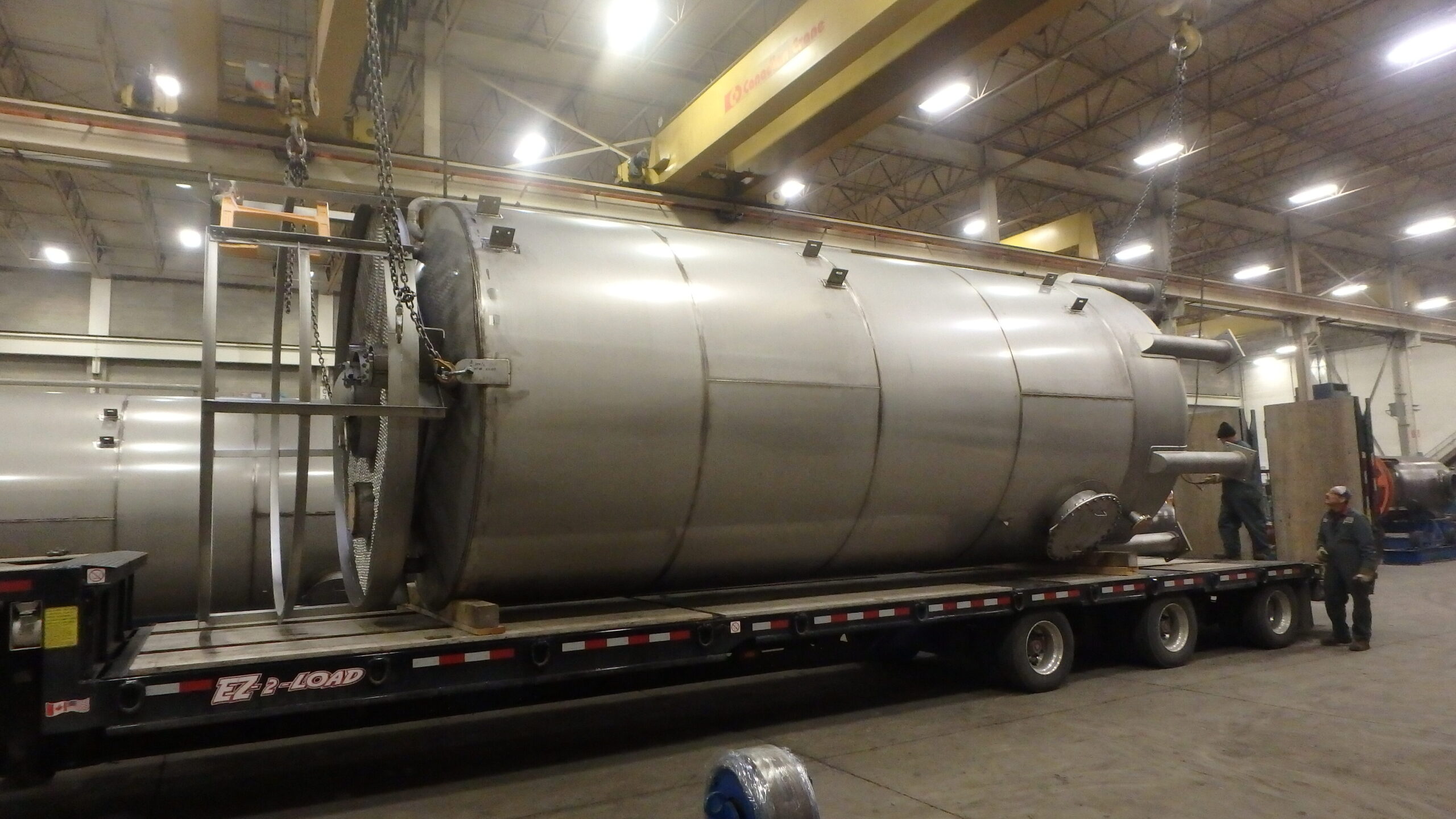
One example from Alps Welding is a carbon steel vessel for the oil and gas industry measuring approximately 114 inches in diameter by 142 inches tangent-to-tangent. The project includes multiple process connections and large access openings, illustrating the details that must be coordinated within a custom vessel design.
See Alps’s pressure vessel projects for photographs and project specifications.
What Should You Define Before Requesting a Quote?
A useful enquiry gives the manufacturer enough information to understand the duty, scope and main constraints. Include the following details wherever they are available:
Pressure Vessel Quote Checklist
- Process fluid and service: Identify the contents, composition and known corrosion, erosion or cleanliness requirements. Include process flow and performance requirements where relevant.
- Operating and design conditions: Provide operating pressure and temperature separately from specified design conditions. Identify vacuum service, minimum design metal temperature and significant operating cycles where applicable. State units and whether pressures are gauge or absolute.
- Dimensions and orientation: Include required capacity, diameter, length, vertical or horizontal orientation, available space and support requirements. State whether dimensions refer to inside diameter, outside diameter, tangent-to-tangent length or overall length.
- Materials: List specified grades, corrosion allowance, lining or cladding, and any restrictions on material sourcing or substitution.
- Connections and internals: Share a nozzle schedule, connection sizes and ratings, orientations, access openings, internal components and attachments.
- Installation location: Identify the destination province or country, indoor or outdoor service, and available information on site loads, access and transport restrictions.
- Codes and documentation: Identify the required construction code, registration requirements, examination scope, inspection hold points and document package.
- Schedule and scope: State the required delivery date, approval milestones and which components or services the customer will supply.
You do not need a fully completed design to start a conversation. Send the information you have and clearly identify what remains preliminary. This helps the manufacturer distinguish a budget estimate from a quotation based on an agreed specification.
What Changes the Cost and Delivery Schedule?
Two vessels with similar dimensions can require different amounts of material, fabrication work and inspection. A useful quotation explains its scope and assumptions so you can compare what each supplier has included.
Dimensions and design conditions
Vessel diameter, length, design pressure and temperature influence the engineering and fabrication requirements. Thickness, weight and geometry can also affect forming, welding, handling and transportation. A compact vessel with complex details may involve substantial work despite its smaller size.
Materials and purchased components
Material grade, product form and availability influence procurement. Specified heads, flanges, forgings, sight glasses and other components may have their own supplier lead times. Confirm acceptable alternatives early, with any substitution subject to the required engineering and customer approval.
Connections and internal details
Nozzles, manways, internal supports and other attachments add fabrication and coordination work. Their locations also matter: restricted access can make assembly, welding and examination more involved.
Inspection and finishing requirements
The required examination methods and extent, pressure testing, any specified heat treatment, surface preparation and coatings all form part of the scope. These requirements should be established before comparing prices, since they can change both the work involved and its sequence.
Approvals and delivery planning
The schedule should account for drawing reviews, applicable registration, material procurement, fabrication, inspection and shipment. Ask which milestones depend on customer approval or information. A required delivery date is easier to evaluate when those dependencies are visible.
What Should You Ask a Pressure Vessel Manufacturer?
A productive supplier discussion connects the manufacturer’s capabilities to your specific project. Useful questions include:
- Have you fabricated vessels with comparable materials, dimensions and service requirements?
- What are your handling and fabrication limits, and which specialist operations will be subcontracted?
- Who is responsible for process sizing, mechanical design, code calculations and drawing approval?
- Which current authorizations apply to this scope, and who will coordinate any required design registration?
- How will material traceability, examination, inspection and pressure testing be documented?
- What records are included at delivery, and when will drawings and other documents be submitted?
- What assumptions, exclusions and customer actions does the proposed schedule depend on?
For a Canadian installation, discuss the construction code and applicable provincial or territorial registration requirements separately. ASME BPVC Section VIII, Division 1 is a pressure vessel construction code. Design registration and a Canadian Registration Number (CRN), where required, involve the relevant jurisdiction’s requirements; specifying ASME construction does not by itself settle the registration scope.
For reference, see ASME Section VIII, Division 1 and TSSA’s design registration guidance for Ontario.
Ask the manufacturer to explain which requirements apply to your project and what is included in the proposal. This gives you a clearer comparison than a list of certification logos alone.
How Does a Custom Pressure Vessel Move Through Fabrication?
The following stages describe a typical custom pressure vessel project. The exact sequence and inspection hold points depend on the design, applicable requirements and agreed project plan.
1. Specification review and engineering
The project begins with a review of the customer’s information, scope and unresolved requirements. Mechanical design and drawings develop the vessel details, including materials, thicknesses, connections, supports and relevant loads. Required customer reviews and registration activities are coordinated before the affected work proceeds.
2. Material procurement and preparation
Materials and purchased components are ordered to the agreed requirements. Identification and supporting records are checked, and traceability is maintained as material moves through fabrication. Preparation may include cutting, edge preparation and specialist forming operations.
3. Fit-up, welding and assembly
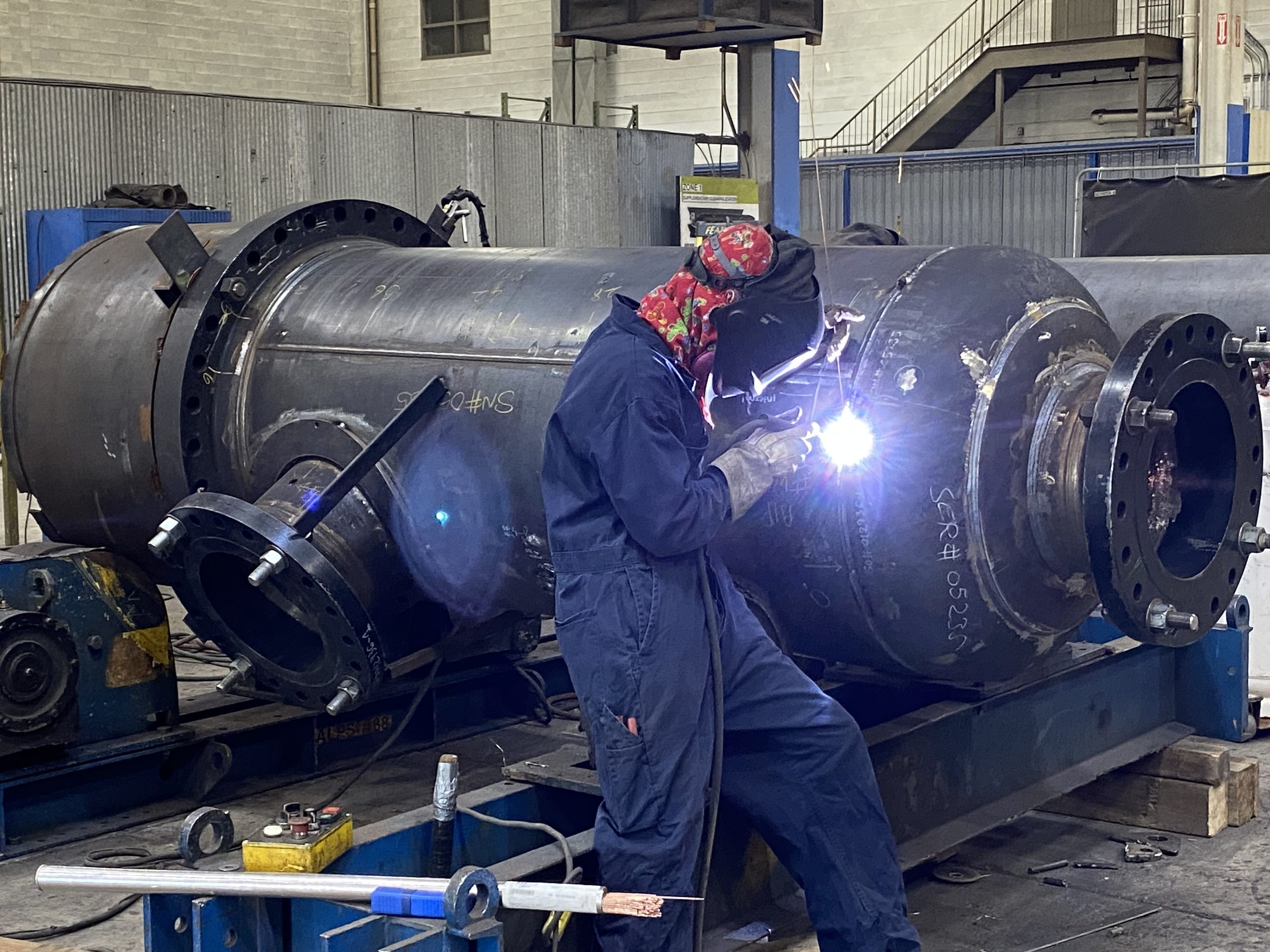
The shell, heads and other components are fitted and welded using applicable qualified procedures and personnel. Connections, supports and internals are incorporated in the planned sequence. Dimensional checks help confirm that critical interfaces match the approved drawings.
4. Examination, inspection and testing
Examination and inspection take place at the required stages, including before areas become inaccessible. The methods and extent depend on the code and project specification; every vessel does not require every examination method. Pressure testing follows the approved requirements, with the necessary inspection and acceptance records.
5. Finishing, documentation and shipment
Specified surface preparation, coatings or other finishing work are coordinated with the inspection plan. Before shipment, the agreed records are compiled and the vessel is prepared for handling and transport. Protection of openings and finished surfaces, shipping dimensions and delivery arrangements should be addressed in the project plan.
What Can You Clarify Early to Reduce Rework?
Many avoidable revisions concern how the vessel connects to the rest of the installation. Reviewing these interfaces while drawings are still being developed can help reduce changes during fabrication.
Connection locations & maintenance access
Check nozzle orientation, flange access and clearances against the surrounding piping and structure. Consider the space needed to open covers, remove internals, service instruments and reach inspection points. An opening may fit on a drawing while the equipment needed to use it requires additional space.
Customer-supplied components and scope boundaries
Confirm who supplies and installs instrumentation, relief devices, sight glasses, internals, insulation and other associated items. Obtain dimensions and connection details for customer-supplied components early enough to incorporate them into the vessel design. Record who is responsible for final installation and commissioning activities.
Drawing revisions and approvals
Use an agreed drawing revision and a clear approval process. A change to a nozzle, support or internal component can affect more than its immediate location. Review the engineering, procurement, inspection and schedule consequences before releasing the change to fabrication.
Transport and site access
Check the shipping envelope against route and site restrictions. Discuss lifting arrangements, temporary shipping supports, delivery orientation and receiving responsibilities before the equipment is ready to leave the shop.
Planning Your Pressure Vessel Project with Alps Welding
Alps Welding manufactures custom pressure vessels and industrial process equipment in Woodbridge, Ontario. We work with customers to develop project requirements and support their equipment through engineering, fabrication and delivery.
Whether you have a preliminary datasheet or an established specification, sharing your requirements early gives us a starting point for discussing scope, fabrication needs and delivery expectations.
Explore our custom pressure vessel projects and certifications, or contact our team about your upcoming project.